Best left-handed guitar

A guitar is one of the most genuinely handed objects you can buy, and one of the easiest to get wrong, because a right-handed guitar strung upside down is sold to beginners as a "left-handed" instrument far too often. This guide explains the specs that separate a true left-handed build from a converted one — handedness, body type, tonewood, electronics and scale — so you can tell what you are actually buying, then points you to picks across acoustic-electric, electric, classical and budget once they are verified.
A note on how to read this. Dedicated guitar sites go deeper on any single model than we will; what this guide adds is the same labelling discipline we use everywhere else, so the Handedness column tells you at a glance whether an instrument is built left-handed or merely converted. Read the framework, decide on a type, then look at the picks.
How to choose a left-handed guitar
Five things decide whether a guitar genuinely suits a left-hander. Run any guitar through these — they are exactly the columns in the comparison below.
Handedness — built left-handed, or converted
Read this column first. True left-handed means built that way from the factory: mirrored body, a nut cut for left-handed spacing, reversed bracing on an acoustic, and the controls and cutaway on the correct side. Ambidextrous is rare for guitars but exists on some symmetric travel and beginner instruments, and we label it honestly rather than dressing up a right-handed model. Mirrored / converted flags a right-handed guitar restrung for a left-hander — fine if properly set up with a re-cut nut, compromised if simply flipped. The complete lefty gear guide covers the labelling system in full.
Body type — comfort, volume and feel
Body type sets how the guitar feels and sounds. A dreadnought acoustic is loud and full but large; a concert or grand-auditorium body is more comfortable for smaller players. Electrics range from solid-body to semi-hollow. Classical guitars have a wider, flatter neck. Pick the body that suits your size and the music you want to play.
Tonewood — tone and price
The woods shape both tone and cost. A solid top (rather than laminate) generally sounds richer and is worth seeking on an acoustic; the back and sides colour the tone further. For a first guitar you do not need exotic woods — a solid-top beginner model is the sweet spot. We list the tonewood so you can weigh tone against budget.
Electronics — can you plug it in
Electronics decide whether you can amplify the guitar. An acoustic-electric adds a pickup and preamp so you can play through an amp or PA; a pure acoustic cannot plug in without an add-on. An electric guitar needs an amp to be heard properly. Match the electronics to whether you plan to perform or just play at home.
Scale length — tension and reach
Scale length is the distance the strings vibrate, and it affects string tension and how far your fretting hand has to stretch. A longer scale gives tighter strings and a brighter tone; a shorter scale is easier on smaller hands and beginners. It matters for comfort regardless of handedness, so factor it into the fit.
The guitars compared
A short list of widely available left-handed guitars, compared on the five specs above — led by the Handedness label so you can see which are built left-handed and which are converted. Specs are verified against manufacturer and Amazon listings — no hands-on testing claims, just the facts that decide the fit.
| Best for | Handedness | Body type | Tonewood | Electronics | Scale |
|---|---|---|---|---|---|
| Best overall | True left-handed | Single-cutaway grand concert, shallow body, acoustic-electric | Spruce top; Sapele back and sides; Okoume neck; Purpleheart fingerboard | Ibanez AEQ-2T preamp with bass/treble EQ and onboard LCD tuner | 25.6 inches; 43mm nut width |
| Best for beginners | True left-handed | Cutaway dreadnought, full-size 41 inch, acoustic | Spruce top (laminate, scalloped bracing); Mahogany back, sides and neck; Rosewood-style fingerboard | None (acoustic only) | 25.5 inches; 20 frets |
| Best electric | True left-handed | Solid-body electric, Stratocaster double-cutaway | Poplar body; Maple neck; Maple fingerboard | 3x ceramic single-coil pickups, 5-way selector, tremolo bridge | 25.5 inches; 21 frets; 9.5" fingerboard radius |
| Best budget | True left-handed | Folk / grand auditorium, acoustic-electric, cutaway | — (verify on product page) | Built-in EQ preamp | — (verify on product page) |
| Best classical | True left-handed | Full-size classical, slim neck profile | Spruce top; Mahogany back and sides; Walnut fingerboard and bridge | None (acoustic classical) | 650mm (25.6 in) classical scale; 52mm nut width; includes gig bag |
Our top picks
Best overall: Ibanez AEG7 Left-handed Acoustic-electric Guitar - Dark Violin Sunburst

Best overall
Ibanez AEG7 Left-handed Acoustic-electric Guitar - Dark Violin Sunburst
Ibanez
- Handedness: True left-handed
- Body type: Single-cutaway grand concert, shallow body, acoustic-electric
- Tonewood: Spruce top; Sapele back and sides; Okoume neck; Purpleheart fingerboard
- Electronics: Ibanez AEQ-2T preamp with bass/treble EQ and onboard LCD tuner
- Scale: 25.6 inches; 43mm nut width
- Best for: Acoustic-electric all-rounder
The Ibanez AEG7 Left-Handed is a slim grand concert acoustic-electric with a shallow body that reduces stage feedback — useful for live performance. The onboard LCD tuner functions unplugged, and the single cutaway allows full upper-fret access.
Last checked 2026-05-21
Best for beginners: Donner Left Handed Acoustic Guitar Kit for Beginner Adult Full Size Cutaway Lefty Acustica Guitarra Bundle Set with Bag Strap Tuner Capo Pickguard String, 41 Inch, DAG-1CL

Best for beginners
Donner Left Handed Acoustic Guitar Kit for Beginner Adult Full Size Cutaway Lefty Acustica Guitarra Bundle Set with Bag Strap Tuner Capo Pickguard String, 41 Inch, DAG-1CL
Donner
- Handedness: True left-handed
- Body type: Cutaway dreadnought, full-size 41 inch, acoustic
- Tonewood: Spruce top (laminate, scalloped bracing); Mahogany back, sides and neck; Rosewood-style fingerboard
- Electronics: None (acoustic only)
- Scale: 25.5 inches; 20 frets
- Best for: Complete beginner kit
The Donner DAG-1CL is a complete left-handed beginner bundle — guitar, gig bag, strap, tuner, capo, picks, and strings included. The cutaway body allows upper-fret access as skills develop, and the full-size 41-inch dreadnought produces a resonant tone for the price.
Last checked 2026-05-21
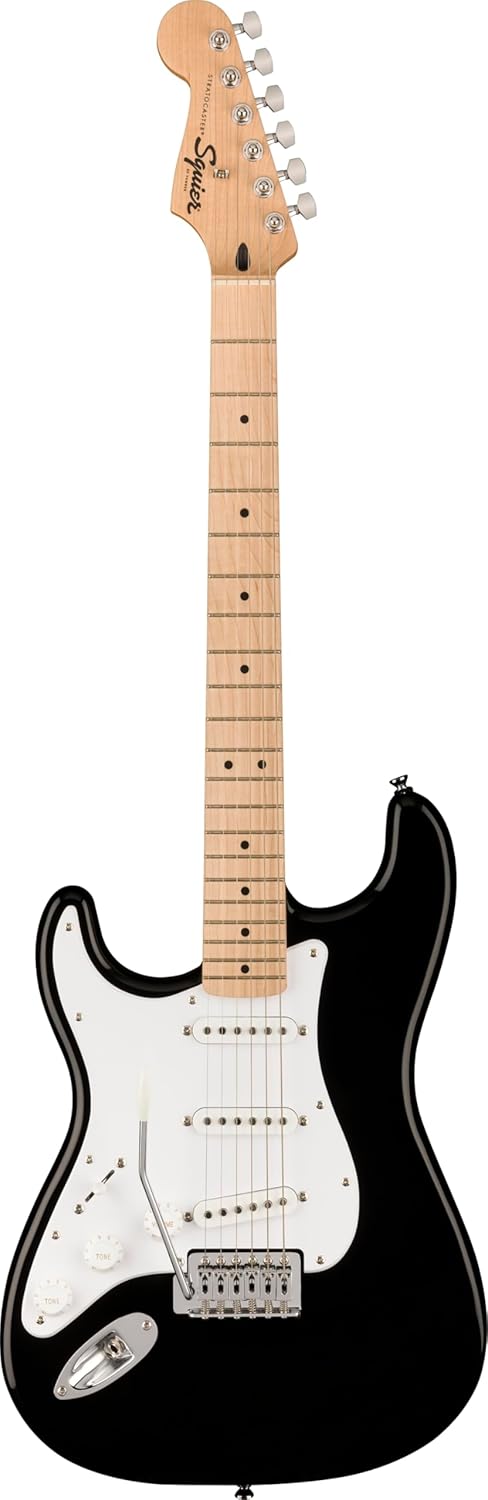
Best electric: Squier Sonic Stratocaster Electric Guitar, with 2-Year Warranty, Black, Maple Fingerboard, White Pickguard, Left-Handed
Best electric
Squier Sonic Stratocaster Electric Guitar, with 2-Year Warranty, Black, Maple Fingerboard, White Pickguard, Left-Handed
Squier (by Fender)
- Handedness: True left-handed
- Body type: Solid-body electric, Stratocaster double-cutaway
- Tonewood: Poplar body; Maple neck; Maple fingerboard
- Electronics: 3x ceramic single-coil pickups, 5-way selector, tremolo bridge
- Scale: 25.5 inches; 21 frets; 9.5" fingerboard radius
- Best for: Beginner to intermediate electric
The Squier Sonic Stratocaster Left-Handed is a genuine left-handed electric guitar built on the iconic Stratocaster platform, with Fender's 2-year warranty. The lightweight poplar body and slim C-shaped Maple neck make it approachable for new players moving to electric.
Last checked 2026-05-21
Best budget: Winzz Electro-Acoustic Guitar for Adults, 4/4 Full Size Beginner Guitar Folk for Children over 12 years (Left Handed Black)

Best budget
Winzz Electro-Acoustic Guitar for Adults, 4/4 Full Size Beginner Guitar Folk for Children over 12 years (Left Handed Black)
Winzz
- Handedness: True left-handed
- Body type: Folk / grand auditorium, acoustic-electric, cutaway
- Tonewood: — (verify on product page)
- Electronics: Built-in EQ preamp
- Scale: — (verify on product page)
- Best for: Budget acoustic-electric under $120
The Winzz Left-Handed electro-acoustic is a full-size folk-body guitar with a built-in EQ preamp — making it the most affordable left-handed acoustic-electric option on Amazon. The "Left Handed Black" variant is a genuine left-handed build, distinct from the right-handed version.
Last checked 2026-05-21
Best classical: Ortega Guitars Family Series Full Size Slim Neck Left-Handed Nylon String Classical Guitar with Gig Bag, Spruce Top - Natural Satin, R121SN-L

Best classical
Ortega Guitars Family Series Full Size Slim Neck Left-Handed Nylon String Classical Guitar with Gig Bag, Spruce Top - Natural Satin, R121SN-L
Ortega
- Handedness: True left-handed
- Body type: Full-size classical, slim neck profile
- Tonewood: Spruce top; Mahogany back and sides; Walnut fingerboard and bridge
- Electronics: None (acoustic classical)
- Scale: 650mm (25.6 in) classical scale; 52mm nut width; includes gig bag
- Best for: Classical and nylon string playing
The Ortega R121SN-L is the slim-neck left-handed variant of the Family Series classical guitar — a genuine left-handed build with mirrored body and nut. The 52mm classical nut width and 650mm scale are standard for nylon-string guitars, and the slim neck profile suits players crossing over from steel-string.
Last checked 2026-05-21
Who should buy what
Complete beginners
A true left-handed classical or beginner acoustic is the gentlest entry — forgiving necks, sensible prices, and wide availability. Confirm it is genuinely built left-handed, not flipped, and you avoid the most common beginner mistake in this category.
Players who want to plug in
Choose an acoustic-electric or an electric, depending on your sound. The key check is the same: a true left-handed build puts the controls, cutaway and jack where your right hand reaches them, which a converted instrument rarely does.
Left-handers weighing a conversion
A properly converted right-handed guitar — re-cut nut, reversed saddle, intonation set — can be a good way into a model that has no left-handed version. A simple flipped restring is playable but compromised. Decide with the Handedness label, and pay for the proper conversion or the true build.
The mistakes worth skipping
Buying a first left-handed guitar goes wrong in a handful of predictable ways. They are all easy to dodge once you know them.
- Buying a flipped right-handed guitar sold as "left-handed". A simple upside-down restring leaves the controls, cutaway and an unfiled nut on the wrong side. Confirm it is built left-handed, or properly converted, before you pay.
- Reading the title instead of the photo. On a true left-handed guitar the cutaway, controls and jack sit on the player's right. If the picture shows them on the standard right-handed side, it is a right-handed instrument.
- Overbuying for a first guitar. A solid-top beginner model is the sweet spot. You do not need exotic tonewoods or a signature electric to learn on.
- Ignoring scale length and body size. A guitar too large or too long-scaled for your frame is harder to learn on, handedness aside. Comfort keeps you practising.
- Assuming you must play left-handed. Some left-handers learn right-handed happily and gain the whole used market. Try both ways early if you have no strong preference yet.
Where a guitar fits in a left-handed life
A guitar is the most romantic item on this site, but it follows the same rule as everything else: confirm it is genuinely mirrored, not merely flipped. That single habit — built versus converted, true versus relabelled — is the thread that runs through every category here, and the best place to internalise it is the complete lefty gear guide. For more on true-versus-converted instruments by type, see the left-handed music hub.
Frequently asked questions
What is the difference between a true left-handed guitar and a converted one?
A true left-handed guitar is built that way from the factory — the body is mirrored, the nut is cut for left-handed string spacing, the bracing on an acoustic is reversed, and the controls and cutaway sit on the correct side. A converted guitar is a right-handed instrument restrung and set up for a left-hander. A good conversion with a re-cut nut and reversed saddle can play well, but a right-handed guitar simply strung upside down leaves the controls, cutaway and an unfiled nut all on the wrong side.
Should a left-handed beginner buy left-handed or learn right-handed?
There is no universal answer — only the one that suits how your hands want to work. Some left-handers learn right-handed happily, which opens up the entire used market and the widest model choice. Others find it never feels natural and progress faster on a true left-handed instrument. If you already strum more naturally with your left hand, buy left-handed. If you have no strong preference yet, learning right-handed is a practical option worth trying first.
Are left-handed guitars more expensive?
Often a little, because they are made in smaller numbers, and the selection is narrower at every price point. The premium is usually modest on mainstream beginner models, which most big brands now offer in a left-handed version. Where cost climbs is at the boutique end, where left-handed builds are rarer. For a beginner, plenty of good true left-handed acoustics, electrics and classicals exist at sensible prices.
Can I convert a right-handed guitar to left-handed myself?
You can restring it, but a proper conversion needs more than swapping the strings. The nut is cut with different slot widths for each string, so it should be replaced or re-cut for left-handed spacing, and on many guitars the saddle needs reversing for correct intonation. On an electric the controls and jack will be in the wrong place, which a restring cannot fix. A simple flipped restring is playable but compromised; a true left-handed build avoids all of it.
Which guitar type is easiest for a left-handed beginner to find?
Classical and nylon-string guitars are a genuine easy win — true left-handed classical guitars are widely available and reasonably priced, and the wider, flatter neck and softer nylon strings are forgiving for new fingers. Beginner acoustic and acoustic-electric models from the major brands are also commonly offered left-handed. Electrics are well covered too, though boutique and signature models are where left-handed options thin out.
How do I check a listing is genuinely left-handed?
Look at the photo, not just the title. On a left-handed guitar the cutaway, the controls and the input jack sit on the player's right side, and the strings run thickest at the top when held left-handed. If the pictured guitar has the controls and cutaway on the standard right-handed side, it is a right-handed model however it is listed. Read the left-handed reviews too, where other lefty players say plainly whether the build is the real thing.
What specs matter most when comparing left-handed guitars?
After confirming it is genuinely built left-handed, compare body type (the shape and size, which sets comfort and volume), tonewood (which shapes tone and price), electronics (whether it has a pickup and preamp for plugging in), and scale length (which affects string tension and playability for smaller hands). These are exactly the columns in the comparison table, with handedness leading.